
 Türkçe
 English
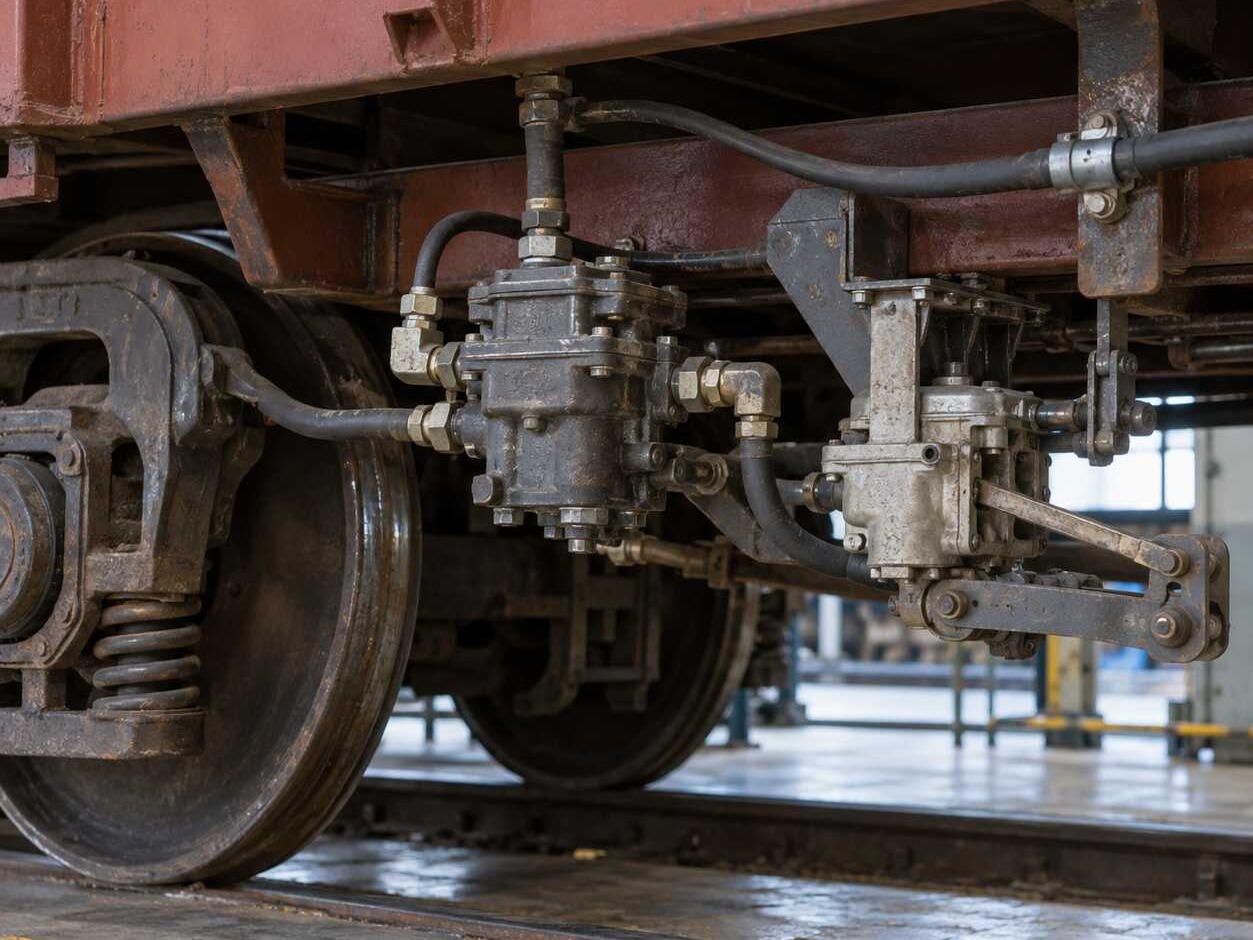
Freight Wagon Brake System Overview
A freight wagon brake system is one of the key systems used in railway transport to reduce wagon speed in a controlled manner and bring the train to a safe stop. Freight wagons can have different braking requirements depending on their load and operating conditions. Correct brake system operation is therefore important for controlling train movement and maintaining railway operational safety.
Pneumatic railway brake systems, widely used on freight wagons, rely on controlling compressed air and transmitting braking force to mechanical components. The brake pipe, control valves, air reservoirs, brake cylinders, and mechanical connections are among the system's main components. Equipment such as relay valves and load-weighing valves can also help manage pressure and generate braking force suited to the load, depending on the brake system design.
How Does Braking Work on Freight Wagons?
In conventional automatic air brake systems, a braking command is transmitted through changes in pressure in the brake pipe that runs along the train. In response to these changes, the control valve directs compressed air from the air reservoirs to the brake cylinder. The force generated in the brake cylinder is transferred through mechanical connections to the brake shoes or, depending on the system, the brake pads.
During braking, friction slows the rotation of the wheels. When the brakes need to be released, the relevant pneumatic control mechanism reduces the pressure in the brake cylinder.
Why Relay Valves and Load-Weighing Valves Matter
In suitable pneumatic brake arrangements, a relay valve helps manage a higher airflow in response to control pressure. In load-sensing brake systems, a load-weighing valve can help adjust braking pressure according to the wagon's load.
The main functions of these components can be summarized as follows:
- Relay valve: Manages the air supply to, or exhaust from, the relevant brake circuit in response to a pneumatic control signal.
- Load-weighing valve: In suitable systems, helps regulate brake pressure according to the wagon's load.
- Brake cylinder: Converts compressed-air energy into mechanical braking force.
- Mechanical connections: Transfer the generated braking force to the friction components.
Technical Compatibility in Freight Wagon Brake Systems
Freight wagon brake equipment can vary according to vehicle design and the characteristics of the pneumatic system. Valves, cylinders, and connecting components must therefore be compatible with the existing brake system. Correctly identifying components used in load-dependent braking arrangements is particularly important.
Özar Grup supplies brake system components for the maintenance and overhaul of railway freight wagons. To identify a suitable part, contact the company with the vehicle type, brake system model, part number, or technical specification.
What Is a Brake Relay Valve?
A relay valve is an important valve component in pneumatic brake systems for railway vehicles. It manages compressed-air flow in response to control pressure. Its primary function is to direct air to the relevant brake circuit or exhaust air from that circuit in response to a pneumatic signal from the brake control system. This helps transmit the braking command to the application mechanism.
Pneumatic brake equipment used on freight wagons can vary according to vehicle design and brake arrangement. The brake relay valve provides a functional connection between the control circuit and the brake cylinder's air supply in suitable systems. It manages compressed air in response to changes in control pressure, regulating airflow to the brake cylinder in accordance with the system's technical design.
How a Relay Valve Works
A relay valve uses a pneumatic control signal to manage airflow from a separate compressed-air source to the relevant circuit. When a braking command changes the pressure at the control port, the valve's internal mechanism responds. Under suitable operating conditions, the supply path can open to deliver compressed air to the brake cylinder.
When control pressure decreases, the valve can help exhaust air from the brake cylinder, depending on its design. This allows pneumatic control of brake application and release. A relay valve does not generate braking force on its own; it delivers compressed air to the relevant brake equipment in a controlled manner.
Main Functional Elements of a Relay Valve
The internal design of relay valves varies according to the manufacturer and intended use. However, pneumatic relay valves share functions such as sensing pressure, directing airflow, and maintaining air tightness.
- Control connection: Transmits the pneumatic pressure signal from the brake control system to the valve.
- Supply connection: Connects the compressed-air source to the valve.
- Outlet connection: Directs the regulated compressed air to the relevant brake circuit.
- Internal control mechanism: Regulates airflow in response to control pressure.
- Sealing components: Help the valve's internal air passages operate as intended and limit unwanted leaks.
Difference Between a Relay Valve and a Distributor Valve
In railway brake systems, relay valves and distributor valves are pneumatic control components with different functions. In a conventional automatic air brake, the distributor valve evaluates changes in brake pipe pressure and manages brake application and release. In suitable brake arrangements, the relay valve regulates airflow from a separate air supply to the brake circuit in response to the control pressure it receives.
These two valves can perform complementary functions within a system. However, the same valve arrangement should not be assumed to apply to every freight wagon brake system. Equipment selection and maintenance should follow the technical documentation for the existing brake system.
Technical Compatibility When Selecting a Relay Valve
When sourcing a relay valve, consider its connections, control principle, and the characteristics of the brake system in which it will be used. Valves with a similar appearance may be designed for different pneumatic circuits, so selecting a part based only on a general product description is not sufficient.
Özar Grup supplies relay valves for railway vehicle maintenance and overhaul. To identify a suitable valve, contact the company with the vehicle type, brake system model, part number, or technical specification.
What Does a Brake Relay Valve Do?
In suitable pneumatic brake systems on freight wagons, a relay valve manages compressed-air flow in response to control pressure and helps transmit the braking command to the application mechanism. Depending on the brake system design, it directs air from a separate source to the brake cylinders or exhausts air from them. It therefore performs an important control function during both brake application and release.
Coordinated operation of railway braking equipment is important for slowing freight wagons in a controlled manner. A relay valve provides a functional link between the pneumatic control circuit and the mechanism that generates braking force. Correct valve operation helps manage pressure in response to the braking command.
Delivering Compressed Air to the Brake Cylinder
One of the relay valve's main functions is to manage the brake cylinder's air supply in response to the pneumatic signal received from the control circuit. When a braking request is made, the valve's internal mechanism moves in response to the change in control pressure. This can deliver air from a separate source to the brake cylinder.
Compressed air reaching the brake cylinder moves its piston and helps generate mechanical braking force. The force is transferred through the connection mechanism to the brake shoes or, depending on the brake arrangement, to the pads.
Role in Brake Application and Release
A relay valve manages the air supply during braking and also takes part in releasing the brakes. When control pressure changes, the valve can reduce pressure in the brake cylinder according to its operating principle, helping release the braking mechanism.
The relay valve's main functions in these processes include:
- Responding to the control signal: Reacts appropriately to pressure changes in the pneumatic control circuit.
- Managing the air supply: Helps deliver the compressed air required for brake application to the relevant circuit.
- Regulating brake cylinder pressure: Helps control outlet pressure according to the valve design.
- Exhausting air: Releases compressed air from the relevant circuit when the brakes are released.
How a Relay Valve Affects Braking Performance
The relay valve's condition can directly affect pressure management in the pneumatic brake circuit where it is used. If the valve does not respond correctly to the control signal, brake application or release may become irregular. Its mechanical movement, connections, and air-tightness should therefore be assessed during maintenance.
Contamination inside the valve, wear in moving components, or deterioration of seals can adversely affect airflow. However, not every pressure problem observed during braking originates in the relay valve. The control circuit, air supply line, and connected equipment should also be inspected.
How Relay Valves Relate to Load-Weighing Valves on Freight Wagons
Braking requirements on freight wagons can vary depending on whether the vehicle is empty or loaded. In load-sensing brake arrangements, a load-weighing valve helps regulate braking pressure according to the wagon's load. In suitable systems, the relay valve manages the delivery of air to the brake cylinder in response to the relevant control pressure.
These two valves can perform complementary functions depending on the brake system design. The load-weighing valve regulates pressure according to the load, while the relay valve manages airflow. Both components must be compatible with the existing pneumatic circuit for the system to operate correctly.
Relay Valve Maintenance Checks
The main purpose of relay valve maintenance is to verify that the valve responds to control pressure and directs compressed-air flow as intended. Inspections may cover the physical condition of connections, seals, and the valve's overall operation.
Air leaks, mechanical binding, or irregular operation found during inspections should be assessed against the relevant technical documentation. After any necessary repair or part replacement, the brake circuit should be verified in accordance with the manufacturer's maintenance instructions.
Özar Grup supplies relay valves and related brake system components for freight wagon maintenance and overhaul. Providing the vehicle type, existing valve part number, or technical specification with a request helps identify suitable equipment.
What Is a Load-Weighing Valve?
A load-weighing valve is a control component in load-sensing pneumatic brake systems used on freight wagons. It helps regulate braking pressure according to the wagon's load. The total mass of a freight wagon varies with the amount of cargo it carries, and this can change the braking force required. In suitable brake system designs, the load-weighing valve therefore plays an important role in adjusting braking force to the load.
Since empty and loaded wagons have different operating conditions, the braking system must take these load conditions into account. The load-weighing valve helps manage brake pressure based on information from the relevant mechanical or pneumatic load-sensing arrangement. This helps adjust braking force to the wagon's current load. The valve's operating principle and connections vary according to the technical design of the brake system.
How Does a Load-Weighing Valve Work?
A load-weighing valve detects changes associated with the load carried by a freight wagon and uses this information to regulate brake pressure. In suitably equipped systems, load information can be obtained from suspension movement or a related sensing mechanism. Depending on the system design, the valve uses this information to help regulate pressure in the brake circuit.
As a wagon's load increases, the total mass that must be controlled during braking also increases. Load-sensing brake systems are designed to support braking force appropriate to this change. A load-weighing valve may be one of the components responsible for this adjustment.
Why Load-Weighing Valves Matter on Empty and Loaded Wagons
The braking requirements of freight wagons can differ between empty and loaded operating conditions. Applying more braking force than necessary to an empty wagon can increase the risk of wheel lock, depending on wheel-to-rail adhesion. If a loaded wagon does not receive sufficient braking force, braking performance may be adversely affected.
Regulating brake pressure according to load is therefore an important function of freight wagon brake systems. The load-weighing valve can contribute to this process in the following ways:
- Adapting to load: Helps regulate brake pressure as the wagon's load changes.
- Managing braking force: In suitable systems, helps adjust the pressure applied to the brake cylinder according to load conditions.
- Managing wheel slide risk: Helps prevent excessive braking force, particularly under low-load conditions.
- Supporting operational reliability: Helps the brake system maintain its intended operation under different load conditions.
How a Load-Weighing Valve Relates to the Load-Sensing Mechanism
Correct operation of a load-weighing valve depends on obtaining accurate information about the load. In some freight wagon designs, this information can be determined from mechanical changes in the suspension under load. Sensing components associated with suspension movement may transmit load information to the brake control mechanism.
When assessing a load-weighing valve, the physical and functional condition of connected load-sensing components should also be inspected. Damaged connections or irregular movement in the sensing mechanism can affect the accuracy of the load information sent to the valve.
Difference Between a Load-Weighing Valve and a Relay Valve
A load-weighing valve and a relay valve perform different functions in pneumatic brake systems. A relay valve manages airflow in the relevant brake circuit in response to the control pressure it receives. In suitable systems, a load-weighing valve helps regulate brake pressure according to the wagon's load.
Although both valves are involved in brake pressure management, they do not have the same purpose. They can perform complementary functions in some brake arrangements, but their use and connections must be assessed according to the design of the freight wagon's brake system.
Load-Weighing Valve Maintenance and Inspection
A load-weighing valve is one of the components that requires careful assessment during maintenance and overhaul because of its pneumatic control function. Contamination, wear, or air-tightness problems in the internal mechanism can adversely affect pressure regulation. Problems with the load-sensing mechanism can likewise make it difficult for the system to respond appropriately to braking conditions.
Maintenance should check the valve connections, physical integrity, and compatibility with the relevant pneumatic circuit. In systems with load-sensing arrangements, the movement of connected mechanical components should also be assessed. Functional checks and part replacements should follow the manufacturer's maintenance instructions.
Technical Compatibility When Sourcing a Load-Weighing Valve
Load-weighing valves used on freight wagons can have different connections and operating characteristics depending on the brake system design and load-sensing arrangement. Selection should not be based solely on the product name or appearance. The existing brake system, the valve's intended function, and the manufacturer's technical requirements must be considered.
Özar Grup supplies load-weighing valves for railway freight wagon maintenance and overhaul. To identify a suitable valve, contact the company with the vehicle type, brake system model, part number, or technical specification.
Brake Pressure According to Load
Regulating brake pressure according to freight wagon load is important for achieving controlled braking performance in railway transport. The total mass of a freight wagon can vary considerably between empty and loaded operating conditions. This also affects the braking force required to slow the wagon. Load-sensing pneumatic brake systems are used to help adjust braking force to the wagon's current load.
Correct management of braking force is important not only for stopping the train but also for maintaining wheel-to-rail adhesion. On freight wagons with suitable brake equipment, a load-weighing valve and related control components can help regulate pressure according to load. The operating principle of these systems varies with the vehicle's technical design and brake equipment.
Braking Requirements for Empty and Loaded Wagons
An empty freight wagon and a fully loaded wagon do not have the same mass while moving. Their braking requirements can therefore differ at the same speed. A loaded wagon may require greater braking force to slow down, while applying excessive force to an empty wagon can increase the risk of wheel slide.
Braking appropriate to the load helps manage the operating conditions of friction components and the wheelset. However, braking performance does not depend on wagon load alone. Wheel-to-rail adhesion, the condition of the braking mechanism, and train operating conditions also affect the braking process.
How Is Brake Cylinder Pressure Regulated?
In pneumatic brake systems, the brake cylinder converts compressed-air energy into mechanical force to activate the braking mechanism. In load-sensing systems, the pressure applied to the brake cylinder can be managed according to wagon load through the relevant control arrangement.
Regulating brake pressure according to load generally involves these functions:
- Obtaining load information: Information about wagon load is received from a mechanical or pneumatic sensing arrangement, depending on the system design.
- Assessing the braking request: The command from the brake control system is processed through the relevant pneumatic components.
- Regulating pressure: Brake pressure is adjusted according to the load-sensing and control mechanism in use.
- Generating mechanical force: Compressed air delivered to the brake cylinder generates force in the friction braking mechanism.
- Applying the brakes: Mechanical connections transfer the generated force to the brake shoes or pads.
What Problems Can Incorrect Brake Pressure Cause?
Brake pressure that is not appropriate for the load can adversely affect braking performance and wheel operating conditions. Applying excessive braking force to an empty wagon can cause the wheels to lock or slide on the rails, depending on available adhesion. This can increase the risk of uneven wear and physical damage to wheel surfaces.
If braking force is insufficient on a loaded wagon, the vehicle may not achieve its intended braking performance. Valves, load-sensing components, and brake cylinders used to manage pressure should therefore be assessed as part of the complete system.
How the Load-Sensing System Relates to the Suspension
The suspension system on freight wagons helps transfer loads carried by the vehicle through the bogies to the wheelsets. In some load-sensing arrangements, mechanical changes in the suspension under load can be used to determine the wagon's load condition.
In these systems, the connection between the sensing mechanism and suspension components is important for correct brake pressure regulation. However, the same load-sensing method should not be assumed to be used on every freight wagon. The existing system's operating principle should be checked against the vehicle manufacturer's technical documentation.
Why Maintenance Matters for Load-Dependent Brake Pressure
Maintenance of load-sensing brake systems should include joint inspections of the load-weighing valve, pneumatic connections, and load-sensing mechanism. Contamination inside the valve, loss of air tightness, or deterioration in mechanical connections can affect pressure regulation according to load.
Key maintenance checks include the physical condition of the valves, air-tightness of pneumatic connections, and free movement of the sensing mechanism. System functions should be assessed using methods specified in the relevant maintenance instructions.
Özar Grup supplies pneumatic components used to manage brake pressure for freight wagon maintenance and overhaul. To identify a suitable part, contact the company with the vehicle type, brake system model, part number, or technical specification.
How the Spring Carrier Relates to Load Sensing
The relationship between the suspension system and brake equipment on freight wagons is important, particularly in systems that regulate braking force according to load. As the wagon's load changes, the working position of suspension components and the forces acting on them can also change. In suitable load-sensing arrangements, these changes can provide information about wagon load and help regulate brake pressure.
The spring carrier is a mechanical component in the suspension arrangement of freight wagons. It is associated with supporting the spring elements and transferring loads between the relevant supporting components. Its primary function is to provide mechanical support. In suitable sensor-equipped designs or connected sensing arrangements, however, the suspension condition under load can also be used to provide information to the brake control system.
Function of the Spring Carrier on a Freight Wagon
The spring carrier works with the components that make up the freight wagon suspension. The suspension system helps transfer loads from the wagon body to the bogie and wheelsets and helps manage dynamic effects during movement. The spring carrier's connections and operating position vary according to the bogie design.
The component's physical integrity is important for keeping suspension elements in their correct operating position. Wear, deformation, or mechanical incompatibility around its connections can adversely affect the operation of the suspension arrangement.
How Is the Spring Carrier Related to the Load-Weighing Valve?
For a load-weighing valve to perform its function in a load-sensing brake system, information about the wagon's load must be obtained appropriately. In some designs, mechanical displacement of the suspension under load can be used to determine this information.
If a sensing mechanism is connected to the spring carrier or related suspension components, load information can be transmitted to the relevant control arrangement. Depending on the system design, the load-weighing valve can then use this information to regulate brake pressure.
However, not every spring carrier is directly connected to a load-weighing valve or performs a load-sensing function. Mechanical support and load sensing should be assessed according to the technical design of the relevant wagon.
Difference Between Standard and Sensor-Equipped Spring Carriers
Spring carriers used in freight wagon suspensions can have different functional arrangements depending on their design. Standard types primarily support suspension components mechanically, while sensor-equipped types may also include a sensing function for monitoring load in suitable systems.
The main differences between the designs can be considered as follows:
- Standard spring carrier: Supports suspension components and transfers mechanical loads.
- Sensor-equipped spring carrier: In addition to its mechanical support function, may help sense load depending on the system design.
- Connection arrangement: Sensor-equipped designs may have additional connections for sensing components.
- Brake system relationship: In suitable control arrangements, sensed load information can be used to adjust brake pressure according to load.
How Suspension Condition Affects Brake Pressure
When load is determined through suspension movement, mechanical connections must operate correctly. Wear in suspension components, damaged connections, or irregular movement can affect the information received by the load-sensing mechanism.
When assessing load-weighing valve operation, the condition of connected load-sensing components should also be checked. Not every suspension problem directly causes a brake pressure fault. However, designs that rely on suspension movement for load sensing may require both systems to be inspected together.
Components to Inspect Together During Maintenance and Overhaul
Maintenance of brake arrangements that link the spring carrier and load-weighing valve requires a joint assessment of mechanical and pneumatic components. This helps determine whether a brake pressure regulation problem originates in the valve, the load-sensing mechanism, or connected suspension components.
Maintenance may include assessment of the following:
- Spring carrier integrity: Inspect the carrier's physical condition, connection areas, and signs of deformation.
- Load-sensing connections: Check the integrity of relevant mechanical or sensor-equipped arrangements.
- Freedom of movement: Assess for problems that could prevent the sensing mechanism from moving as intended.
- Load-weighing valve connections: Inspect pneumatic connections and the valve's overall physical condition.
- Functional suitability: Check load-sensing and brake pressure regulation functions in accordance with the manufacturer's maintenance instructions.
Technical Compatibility When Sourcing Spring Carriers and Load-Weighing Valves
Spring carriers and load-weighing valves can vary according to the freight wagon's bogie design and brake system. When replacing a part, consider the carrier's mechanical connections, whether a sensor-equipped arrangement is present, and its functional relationship with the relevant brake equipment.
Özar Grup supplies spring carriers and related brake system components for freight wagon maintenance and overhaul. To identify a suitable part, contact the company with the vehicle type, bogie model, existing part number, or technical specification.
What to Consider When Requesting Valve Parts
Accurate product identification, technical compatibility, and the characteristics of the existing brake system are key considerations when sourcing pneumatic brake components such as relay valves and load-weighing valves for freight wagons. These valves perform different functions in brake pressure management. A valve name alone may therefore not be enough for a part request. The freight wagon model, brake system arrangement, and technical requirements must also be clearly identified.
Railway brake equipment directly affects the safe operation of vehicles. Using a valve with unsuitable technical characteristics can cause irregular pressure management or connection problems. Part numbers, technical specifications, and information about the existing equipment should therefore be considered together during procurement.
What Information Is Needed for a Valve Part Request?
Providing complete technical information for relay valve and load-weighing valve requests makes it easier to identify a part compatible with the existing system. Manufacturer information and technical documentation are particularly important for distinguishing between valves that look similar but have different operating characteristics.
Recommended information to include in a part request:
- Freight wagon type and model: Identifies the railway vehicle and supports assessment of the relevant brake arrangement.
- Brake system manufacturer and model: Helps identify the existing pneumatic circuit and the valve's function within the system.
- Valve type: Clearly states whether the requested product is a relay valve, load-weighing valve, or another pneumatic control component.
- Part number: The manufacturer's product code is one of the main references for accurate part matching.
- Technical specification: Helps assess the required connections, operating characteristics, and functions of the valve.
- Technical drawing or product image: Makes it easier to inspect the physical design and connections of the existing part.
- Required quantity: Identifies the number of products needed for maintenance or overhaul.
- Maintenance or replacement scope: Explains whether the valve is needed for planned maintenance, overhaul, or a diagnosed fault.
Technical Compatibility When Selecting a Relay Valve
In suitable pneumatic brake systems, a relay valve manages the air supply and exhaust in response to control pressure. Compatibility with the existing brake circuit is important for correctly interpreting the control signal and managing airflow as intended.
When selecting a relay valve, consider its connection layout, control principle, and the technical characteristics of the brake system in which it will be used. Valves with a similar appearance should not be assumed to perform the same function. Product suitability should be assessed using the manufacturer's documentation for the existing equipment.
Why the Load-Sensing Arrangement Matters for Load-Weighing Valve Requests
In load-sensing brake systems, a load-weighing valve helps regulate brake pressure according to whether a wagon is empty or loaded. The valve's operating characteristics must therefore be compatible with the existing load-sensing mechanism.
A request should identify the brake system to which the load-weighing valve is connected and, where applicable, the mechanical load-sensing arrangement. In systems that use suspension movement, the specifications of the connections and sensing mechanism may be important for identifying the correct product.
Assessing Connected Equipment When Replacing a Valve
Valves in pneumatic brake systems work with air pipes, hoses, brake cylinders, and other control components. When replacing a valve, consider not only the technical specifications of the new part but also the condition of connected equipment.
Air leaks, damaged connections, or irregularities in the load-sensing mechanism can affect valve operation. Replacing a part without identifying the source of the fault may not resolve the underlying system problem.
Assessing connected equipment during maintenance and overhaul is important for the following reasons:
- Pneumatic connection compatibility: Ensures that the valve can be correctly connected to the existing air circuit.
- Air tightness: Helps prevent unwanted air leaks at connection points.
- Control mechanism compatibility: Ensures that the valve can respond to the relevant control signals.
- Mechanical connections: Helps ensure that the load-sensing arrangement associated with a load-weighing valve operates correctly.
- Functional verification: The brake system should be checked after installation in accordance with the manufacturer's instructions.
Role of Technical Specifications and Product Documentation
A technical specification helps define the functions a valve must perform in the existing brake system. Manufacturer parts catalogs, installation documents, and technical drawings are important references for identifying the right product.
If the part number is unknown, identifying information on the existing valve, technical drawings, and vehicle documentation can be used in the assessment. Physical similarity alone does not establish technical equivalence. The valve's operating principle and compatibility with the system must be verified.
Valve Supply for Planned Maintenance and Overhaul
Valve requirements can arise from planned maintenance or inspections performed during an overhaul. Maintenance may involve checking the existing valve's functional condition, while overhaul work may also assess connected pneumatic and mechanical components.
Defining required products with technical information helps clarify the maintenance scope during procurement planning. If several valves or connecting components need replacement, their compatibility with the existing brake system and with one another should also be assessed.
Freight Wagon Valve Supply from Özar Grup
Özar Grup supplies relay valves, load-weighing valves, and related brake system components for freight wagon maintenance and overhaul. Supporting part requests with technical information helps assess products suitable for the existing equipment and organize procurement more effectively.
In summary, sourcing freight wagon brake valves requires accurate part identification, system compatibility, and technical documentation to be considered together. To identify a suitable valve, contact Özar Grup with the vehicle type, brake system model, part number, or technical specification.